
Human Flower Project

Cooking

image
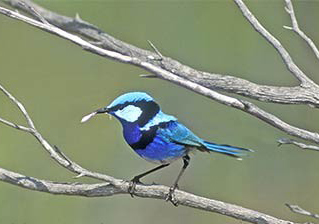
Panchimalco, El Salvador

image
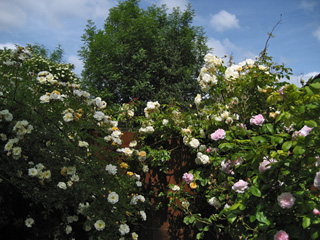
Victoria, Canada

image
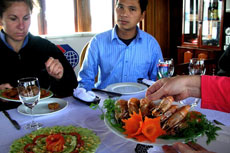
Honolulu, Hawaii

Monday, March 03, 2008

Chicory: The Root of Today’s Coffee Break

Jim Wandersee and Renee Clary provide a tantalizing trip through the Chicory underground, resurfacing in the French Quarter of New Orleans. All we’re missing are the beignets—and are we missing them!

image
Half-dollar-sized Chicory flower head consists of many individual petal-like flowers, squared-ended and toothed
Photo: Cirrus

By James H. Wandersee and Renee M. Clary
EarthScholars™ Research Group

Chicory, also known as Coffeeweed, Succory, and Ragged-Sailors, is a landlubber—a sky-blue member of the Aster (Asteraceae) family. Beautiful as Cichorium intybus (pronounced ”sigh-co’-ree-um inn’-ta-bus”) is, it’s not grown commercially for its flowers but as a salad foliage crop (radicchio) or as a root crop. Herein lies the “coffee connection”: this Chicory’s roots have been used for hundreds of years as a coffee substitute and a coffee additive— and to some people’s joy, it doesn’t contain any caffeine.

imageA Chicory root harvest
Photo: Chicory, S.A.

The root of the plant is cut, sliced, and kiln-dried, then roasted at 325 °F on a conveyor-type roaster and ground up to make commercially available “ground chicory root.”

A craving for “coffee with chicory” emerged in France. During that country’s civil war in the 18th century, coffee was scarce. The French found that roasted and ground chicory added body and flavor to the brew or, in a pinch, even substituted for coffee. The Acadians who journeyed from Nova Scotia brought this culinary delight and many other French customs to Louisiana. During the Union Naval Blockade of the War Between the States, coffee was unavailable, and New Orleanians added ground chicory to their coffee (in a 3:7 ratio) to stretch their unpredictable, precious, and expensive coffee supply. They liked how the coffee-chicory blend made their coffee darker, thicker, and what they termed “bittersweet.” To them, chicory powder not only added a complex flavor to coffee, it also somehow intensified it.

imageCafé du Monde, New Orleans
Photo: Cloud Travel

To this very day, you can depend upon the fact that a cup of café au lait served in New Orleans at its landmark, open-air coffeehouse, Café du Monde (open 24 hours a day, except on Christmas), will be made with rich, dark-roast coffee, ground chicory, and boiled milk--just as it was almost two centuries ago. New Orleans’ chicory coffee is seldom consumed black--it’s typically served mixed with 170°F milk (au lait) and paired with several hot beignets (“ ben-yays’ ”), a local delicacy—square, deep-fried French donuts dusted with powdered sugar. In Louisiana’s capital city of Baton Rouge, the popular coffeehouse most similar to Café du Monde is Coffee Call. Within the Crescent City and surrounding South Louisiana, coffee with ground chicory is sipped in greater quantities than anywhere else in the world.

image
Café du Monde’s signature coffee-chicory blend
Photo: mabjo

New Orleans is currently the number one coffee port in the country (unloading a quarter of a million tons of beans per year) and it clearly loves its coffee. In the mid- 19th century, the city boasted over 500 coffeehouses. All of them served coffee with chicory. They became places where business information was shared and were sometimes called “coffee exchanges” for that reason. We have New Orleans to thank for the work-day coffee break. As late as the 1920s, the coffee break had not yet become a part of the daily routine of American workers. But by 1928 in New Orleans, the mid-morning coffee break had become accepted as a hallmark of “The Big Easy’s” business practice and reflected a philosophy of life that included small pleasures.

Wild Chicory is an easily recognizable roadside biennial. Sometimes this plant can even be weedy or invasive. Flowering occurs from June through September. The average plant produces about 3,000 seeds. It grows wild in all of the “lower 48” states, plus all of the Canadian provinces, and is partial to limestone soil.

image
The biennial life cycle of the Chicory plant
Photo: California Vegetable Specialties

The famous Swedish botanist and taxonomist Carolus Linnaeus used Chicory as one of the flowers in his floral Clock at Upsala (1751), because of the regularity with which its flowers opened and closed. Here in the US, Chicory flowers open about 6 a.m. and close around noon.  A floral clock planted according to his principles is still flourishing at the University of Uppsala, where Linnaeus was a professor.

imageBeignets with at café au lait
served at Café du Monde
Photo: Jeenybeen

If you find you are now insatiably curious about the Chicory plant, how would you like to visit one of the world’s Chicory museums? There are three--the Chicory Museum in Alholmen, Finland (housed in a former Chicory processing factory), the Chicory Museum in Geuzenberg, Belgium (focusing on Belgian endive, an edible blanched-leaf vegetable form of Chicory), and the Maison de la Chicore (housed within a family mansion) in Orchies, France. The latter is run by the Laroux family, the world’s number one Chicory root producer and processor today. Why not explore these unique travel possibilities while sipping a delicious cup of New Orleans-style café au lait?

Note: This article follows the practice of capitalizing the plant’s common name, but not capitalizing the name of its derivative commodity—namely, the ground powder or the name of the coffee blend.

Posted by Julie on 03/03 at 11:33 AM
CookingCulture & SocietyTravel • (2) CommentsPermalink

Thursday, January 31, 2008

Slow Down for Quince

Two fruity and flowery shrubs (at least) go by this name, both of them fine enough to give anybody pause.

image
Flowering quince (Chaenomeles speciosa), thriving in Berkeley, California
Photo (detail): Georgia Silvera Seamans

Screech! Blossoms of flowering quince (Chaenomeles speciosa) will detain any errand. Blooming early, usually on shiny black twigs, they are defiant.

Especially so in the city, where deflecting human fixation is more challenging. Everybody’s so busy, dead-set to get where they’re going. Georgia Silvera Seamans of Local Ecology sent us pictures of her neighborhood quinces in Berkeley, California, and writes about their impact in her intensely focussed city. She also reflects on a recent visit to Spain: “In Madrid we ate quince jelly (dulce de membrillo) with cheese (queso) at tapas bars.” Just that thought is pause-worthy.

The classic detainer of the Mediterranean region is not Chaenomeles (native to China), though, but Cydonia oblonga. Its ”fuzzy, yellow, apple-sized, somewhat edible fruits” were most likely the ingredient in Georgia’s Spanish maremelade. The blooms look more like apple flowers, too, not so colorful as “flowering quince” but very, very lovely.

imageEve, by Lucas Cranach
Image: Galleria Uffizi

Did you catch that “somewhat’ edible? Cyndonia oblonga (quince) may look like a pear, but it’s sour enough to make you cringe. Only a lot of sugar and cooking can make it really palatable. See how Andrea at Heavy Petal has been doing just that. (By the way, Chaenomeles also has sour fruit, and can be made palatable; Georgia says so!). But humans do not live by marmelade alone. The plump golden green of Cyndonia oblonga is decidedly alluring.

We remembered The Owl and the Pussycat:

They dined on mince, and slices of quince,

Which they ate with a runcible spoon...


Runcible spoon or chop sticks, quince seems to be if not an outright aphrodisiac then romance food. The fruit was an attribute of Aphrodite, whose demands have a way of bringing all business to a halt. Ancient newlyweds were said to nibble on quinces before entering their bridal chambers. So, perhaps, did Eve. Painter Lucas Cranach and others allege that the original sin was eating not an apple, but a quince. Eve may have been fallen, but her breath was delightful!

Mythology’s most legendary Cydonia oblonga, however, belonged to Atalanta, the dashing beauty who outran all of her admirers. After their defeat, her suitors would be put to death right there at trackside. Hippomenes had the foresight to slow his sweetheart down. He prayed to Aphrodite for help, and she gave him three quinces to bowl across Atalanta’s path during the deciding race. Who could resist them? The undefeated sprinter reached down to gather each fruit, and in doing so gave Hippomenes time to catch up, then to win.

image
The Race for Atalanta, by David Spear

Has anyone on Barack Obama’s staff considered quinces?

Posted by Julie on 01/31 at 02:34 PM
Art & MediaCookingGardening & LandscapeSecular Customs • (3) CommentsPermalink

Saturday, December 08, 2007

Gina’s ‘On-the Fly’ Lavender Cookies

Our friend in Singapore, Gina Choong comes through with a floral cookie recipe in time for the holidays. (Pardon our rough conversions.) Thank you, Gina!

image
Lavender Cookies
Photo: Kitchen Capers

By Gina Choong

Ingredients
180g all purpose flour (@3/4 c.)
1/2 tsp baking powder
125ml corn oil (@ 1/2/ c.)
125g fine sugar (@ 1/2 c.)
1 egg, lightly beaten
1 tsp dried lavender flowers

Method
1. Add the oil, sugar, egg together to mix.
2. Add sifted flour, flowers and stir till well mixed.
3. Use a cookie scoop or spoon to form balls and place on cookie tray.
4. Bake in preheated oven of 180C (350F) for 10 mins.
5. Remove to cool completely on wire rack before storing in air tight containers.

This was actually a Chinese recipe originally, using another flower, called osmanthus. But I figure that osmanthus may not be readily available in the West so I tried it with lavender instead.  It’s a fairly simple recipe and can be modified using other types of herbs, spices or flowers. I have tried using even chopped kaffir lime leaves with a bit of spice.

imageLavender field
Blanco County, Texas
Photo: Julie Ardery

Fresh flowers are better, but in Singapore there are no fresh lavenders. We get them dried, as these flowers are often sold as tea leaves. If you use fresh lavender, you need to make sure it has no pesticides sprayed into it, and it has to be clean from any bugs or ants. Use just a pinch of the lavender; if you rub it with both hands, it will bring out the fragrance. As they say, too much of a good thing is bad. Don’t put too many flowers into the cookie. It makes it smell like a soap: too fragrant. The flavor of lavender does take a bit of getting used to, especially if you have used lavender-laced products like soap and deodorant.

I think these cookies go great with a weak tea with a bit of sugar, no milk. Try them with Earl Grey; it’s very nice. I’ve enjoyed them with friends when they come over for a leisure talk and tea. It was fragrant and somehow it gives them a sense of home, of love and comfort—a soothing feeling.

I have always believed that if you are passionate about doing something, you make the best out of it. Most of my recipes are created on-the-fly, taking from a familiar recipe and changing the ingredients along the way. Some will say that it never seems to work when you substitute one for another. But I have more successes than failures, because I find great pleasure in cooking. The thing that keeps me going is the look of contented faces.

Note: You may find many more of Gina’s recipes at Kitchen Capers.

Posted by Julie on 12/08 at 09:52 PM
Cooking • (0) CommentsPermalink

Friday, November 30, 2007

Flower Syrup - A Lot to Lick

The East Austin arts tour suddenly took a turn for the sticky.

image
Bill Bishop and Michael May sample flower syrups made
by Rosie Rittenberry (right) and her mother in Austin, TX
Photo: Julie Ardery

Nudes and batiks and teapots and collages… the East Austin Studio Tour has evolved into something marvelously monstrous. The dozen artists who once worked on the poor side of the city, taking advantage of low rents for their foundries and kilns, have been joined by boatloads of other creative folks. There were over a hundred stops on this year’s open tour. The fold-up map has become a $5 booklet, and many a block north of Lady Bird Lake and East of Interstate 35 was crawling with guests the warm and sunny weekend prior to Thanksgiving.

Just as our spirits flagged, we trotted around behind an old house where a weird passionvine—or so we were told—was laden with crimson seed pods, bright as bobcat hearts. There we found a glamorous young woman ladling jellylike spoonfuls into little plastic cups—the size you gobble pills from. Purple, amber, green—these concoctions were all flower syrups. Rosie Rittenberry and her mother make and sell them, and what a refreshment they were. Our touring companions sampled several, as did we (the passionfruit was scrumptious), but what do you do with the stuff? Rosie provided us with a page of recipes, including “Citrus Flower Chutney,” a cake frosting, and a curry dish.

This one sounds especially good, though we haven’t tried it—yet:

imageRosie Rittenberry dolloped out a taste of orange flower syrup
Photo: Julie Ardery

Rose-hips Tea Sandwich

Chicken salad
with rose hips and walnuts

1 1/2 c. cooked chicken
1/2 c. celery
1/4 c. rose-hip syrup
1T. capers
1t grated ginger
1/3 c. walnuts
salt and pepper
mayonnaise if desired (we desire)

Spread on good bread with crust removed
(keeping that crust on if you use this bread).
Cut bread into quarters and then top with parsley

Suddenly, the tea party got jazzy!

From our bit of hunting, it seems that flower syrups are most often used to doll up drinks, dress fruit salads, and, of course, top pancakes. Favorite flavors, in addition to those Rosie had to sell, are elderberry syrup, dandelion, hibiscus and lavender (the latter too much like cough medicine for us).

Jennifer Wickes posted this excellent article on the subject several years back. It includes basic directions for making syrups from flowers as well as lists of common edible flowers and (heads UP!) poisonous ones, too. (Having just seen Into the Wild, we’re more than usually wary.)

Many thanks to Rosie for the samples—and the delicious respite from art.

Posted by Julie on 11/30 at 02:14 PM
Art & MediaCooking • (3) CommentsPermalink

Sunday, November 11, 2007

Apple Day

John Levett tastes tastes, names names. Old varieties like Ribston Pippin recall when the city and the country were more clearly connected.  They lead forward, too, in the movement to save England’s allotments.

image
Story & Photos by

Some years ago BBC Radio 5 ran a Doris Day in celebration of Dorises everywhere. They even managed to get a phone link to the iconic pre-feminist post-ironic Doris of Doris & Rock fame. Doris Day (we’re back to the ‘day’ now) was, of course, a take on the variety of ‘days’ that any feeling-neglected-getting-no-attention-need-awareness cell announces to a no-notice-taken-shout-louder public.

It’s often seriously worthy groups dealing with frequently-unmentionable-and-I’d-rather-you-didn’t inner and outer bodily bits that feel left out of the giving & taking joys of such as Christmas, Easter, Halloween, the essential remembrances of Armistice Day and the vapid creations of The-Day-Diana-Died banality. Then come varieties of tree huggers, save-the stoaters, wear-a-kilt-for healthers, stop-nail-biting-in-under-fivers; to name none that I’ve heard of but am convinced they’ve had a day to themselves.

Apple Day is one such day—made up by old apple growers of old apples and confined, as far as I can tell, to Cambridge. It seems it’s been going for eleven years, attracts queues, sells out its stock of everything apple-related (ciders, juices, toddies, pies, cakes, jams, chutneys, honeys hived in apple orchards), identifies your apples, gives apple history lectures, warns of pests and sells you forty varieties of eaters and cookers. And (inevitably & predictably) there are ‘apple art activities’ for families (kids can’t go anywhere these days without having to draw something; what happened to clambering over stuff and carving your name on it?)

image

It’s housed (or should that be ‘tented’?) at the Cambridge Botanic Garden & sponsored (essential to get global monopoly capitalism behind you these days) by Waitrose. Actually I can understand Waitrose’s participation in this. I haven’t checked out yet how many of these varieties the up-market retailers stock themselves but I’d guess they do a few; here in Cambridge I’m convinced Waitrose match your food to your style of clothing (“We have a very nice cut of Aberdeen steak, madam. It matches your autumnal twin-piece perfectly. Our veal goes with the ear-rings too.”)

A friend phoned me up & asked “Wanna go?” so we did. Autumn this year has been stunning. It seems it has something to do with the washed-out Summer and the extraordinary creation of sugars in the trees, which is no consolation to the flood sufferers but it does make the best out of Cambridge. Sunday was cloudless, the Garden was only a walk away but friend has convertible so we drove and sat in traffic and gas-guzzled. (“Heat that planet up and we can have our very own Cambridge Pineapple Day for the grandkids,” I say.)

imageThe first thing that struck me was the queues outside the tasting tents. Vast! Is queuing an Anglo-Saxon thing? I can remember queuing to get into a glass foundry on the island of Majorca once when a bus load of Italians fell out the bus and trooped in disorderly non-file straight through into the workshop. Quelle horreur! Bounders ought to be shackled!

So, Italian style, we walked to the exit and started there. It was like being a kid again in a sweetshop. Truth to tell, I’ve never been a great apple fan. When I was growing up there was an orchard (bombed but trees still standing) at the top of our plot; great for cricket, camping and playing at failing to hang ourselves (I kid you not!) And pigging out on apples. I went over to bananas which, being just after the last war, still had rarity value. Gradually apples went out of my life, supermarkets came in, taste never came back.

Apple Day changed that. If I’d ever remembered, I’d forgotten what an apple could taste like. I tasted all forty & went back (that would be ‘backwards’ having come in through the exit) to check the taste again. Then bought some. I went for the names knowing that the variety wouldn’t disappoint. Here’re some: Zabergäu Reinette (Germany 1885), Orleans Reinette (France 1776), Ribston Pippin (UK 1707), Rosemary Russet (UK 1831), Crispin (Japan 1930), Belle de BosKoop (Netherlands 1856).

imageEven the crosses sound wonderful: Charles Ross (Cox’s Orange Pippin x Peasgood Nonsuch), Gloster (Richared Delicious x Weisser Winterglockenapf). Then the cookers: Lane’s Prince Albert (1841 Russet Nonpareil x Dumelow’s Seedling), Ontario (1820 Wagener x Northern Spy), Striped Beefing (1794 from Lakenham in Norfolk).

What took me so much was that each variety had a history; came from a place, had a birthday, knew its mother and father, appeared at some time in a nurseryman’s catalogue. Here’s Ribston Pippin raised from a pip brought from Rouen to Ribston in Yorkshire in 1707. I can appreciate that, being a rose grower. I like to know where my roses were raised, something about the rose grower, which crosses brought forth seed, which unlikely parents worked the trick. If Jack Harkness hadn’t done his apprenticeship at J. Burrell & Co. just outside Cambridge about 1930 and learnt hybridizing from Edward Doncaster, I’d never have had Doncasterii in my garden; it’s placing it in history that matters.

This next paragraph is pretty predictable but I’ll do it anyway. I can walk into Asda and pick up a (plastic) bag of Cox’s Orange for a quid; plastic bag because Cox’s would never grow uniformly to fit into a uniform. Golden Delicious do; so they’re beloved of supermarkets. Braeburn fit the same moulded nests. Cox’s have blemishes. GD’s don’t. Cox’s don’t taste quite the same this month as they did last. GD’s do. There was a tale told some time ago that the only country that eats Golden Delicious by the truck load is the UK; stacked up port-side in Calais waiting for the day trippers. I despair. Same goes for tomatoes, potatoes, onions and shallots, pretty much any veg—no acknowledged begetter.

My mother ran a small grocer’s shop when I was growing up and everything had a name—potatoes were King Edwards, tomatoes were Cheshunt Tangellas, onions were Bedfordshire Champions. And from the name you knew when they’d been dug, when picked, when planted and the name of the farm, the name of the nursery, was on the sack, on the box and, as likely as not, they were local. Even living in the city there was some country connection. London’s East End families taking two weeks each year hop-picking in Kent most easily comes to mind (read Orwell’s ‘A Clergyman’s Daughter’) and, living in South London in the mid ‘60s, there was still spending money to be got from fruit picking on the Weald.

imageAllotments are coming back into fashion. There was a danger some decade or more ago that town and city plots were likely to be swallowed by residential development so neglected and abandoned had many of them become. The rise of the organic food trade, the fuss over GM technology, the blandness of supermarket produce, the downturn of taste in readily available fruit and veg & the recognition that a valuable public resource was likely to be lost for ever from our culture translated into a (mostly middle class but not to be deprecated for that!) upsurge in interest & uptake of rented municipal plots.

I can remember renting two plots in the early ‘70s for about £5 each and got seeds and sets from the local allotment association at cost. I also got community. Even then, when Tesco was only at the early stages of mustering its troops, there was something radical about growing your own stuff and that mindset is within the current movement back to allotments. They arose out of the Enclosure and Commons Acts of the Nineteenth Century and the subsequent loss of working class cultivation land (how else to drive them into the factories?) There was a high of a million and a half plots during the last war down to a quarter million by the millennium. The news that the 2012 Olympics would bulldoze some local communal land holdings brought the allotment issue back to the fore. We know what we can lose here.

The average cost of an allotment (250 square metres...think two and a half lanes of a 100m track) in Cambridge is £20 a year. Then think variety, taste, companionship, digestion, exercise, wildlife, conversation, sharing, history, recipes, snacks, soups, roasts, seed catalogues, harvest, summer, timelessness, early morning, sunset, sandwiches, chutney, an apple tree.

It’s not only fruit and veg. I used to grow sweet peas on the plots I had thirty years ago from seed I got every September from Bolton’s near Haverhill in Essex. Twenty varieties each year. Bolton’s have long gone but there are plenty of nurseries who keep the old varieties in their lists. Delphiniums grew there too; sow-‘em-and-see varieties from the Delphinium Society (whose seed list came this week).

It’s something that passed out of my life and high time that it passed back in. I’ve just glanced at Chiltern Seeds’ catalogue—twenty-eight varieties of bean, twenty-three basil, huauzontle and jicama, couve tronchuda, kiwano, miner’s lettuce, scorzonera, vegetable spaghetti. Get some!

Posted by Julie on 11/11 at 09:25 PM
CookingCulture & SocietyGardening & LandscapeSecular Customs • (4) CommentsPermalink

Wednesday, October 31, 2007

‘Not for All the Tea in the USA!’

After 5,000 years of picking, processing, brewing, and tax-evading, the Human-Tea project extends across the world. Drink up this stimulating report by James Wandersee and Renee Clary.

image
Camellia sinensis (L.) Kuntze (a.k.a. Tea)
Photo: Shizhao, via wiki

By James H. Wandersee and Renee M. Clary
EarthScholars™ Research Group

People are, right now, enjoying tea all across the world. Tea, in fact, is second only to water as the globe’s most popular beverage! Although the way it is processed, the vessels used to brew and drink it, the substances added to enhance its flavor, and the rituals associated with its consumption all may vary, tea drinking is global. Even so, it can be traced back to a single country and a single species.

Tea drinking began in China more than 5,000 years ago. Many historians credit China’s second emperor, a scientist named Shen Nung, with the discovery of tea-brewing in 2737 BCE, using the dried leaves of the plant that today’s botanists call Camellia sinensis (L.) Kuntze. This evergreen bush or medium-sized tree ranges from 6 to 50 feet tall when mature.  A typical Tea* bush yields about 3,000 tea leaves a year. Although this may seem like a lot, it results in only 1 pound of processed tea. The highest quality tea is hand-plucked and only includes the tip bud and the two end-most leaves from each branch (“two flags and a spike”). Tea made from the first crop of tea leaves of the year is called “new tea.” It has the richest aroma and flavor, though the processing of tea also dramatically affects the final taste.

image
China’s Fujian Mountain Tea
Photo: Tea Dragon

Earth scientist Huang Shoubo (2007) has identified the environmental factors that account for the Tea plant’s yield and quality in high mountain areas of China. Shoubo concludes that many regional features are conducive to Tea growing here—“geology (topography, hydrology, soil), climate, and vegetation—but the climatological factors proved to be the most important.” Shoubo specifies the key ecological and climatic elements of China’s famous tea areas: “more amounts of clouds and fog, less percentage of sunshine, abundant rainfall and high relative humidity in the air, temperatures that rise and fall slowly, daily and annual temperature ranges that are smaller, more days that are suitable for tea growing and low wind speeds in the lee-sides and valleys of mountains. All of these factors are favorable for growth of Tea trees.”

Camellia sinensis (L.) Kuntze doesn’t sound like ancient Chinese. And it isn’t. The Tea plant was assigned this name in 1959 after several centuries of botanical debate, a decision based on the International Code of Nomenclature. The “L.” in the Tea plant’s scientific name tells us that it was originally classified by the famous Swedish taxonomist, Carolus Linnaeus (1707 – 1778). The word “Kuntze” that follows the “L.” indicates Linnaeus’ classification was revised by the German botanist-apothecary and world-traveler Otto Carl Ernst Kuntze (1843 - 1907).  Linnaeus named the Tea plant’s genus “Camellia” after the Jesuit missionary Georg Joseph Kamel (1661 – 1706), “the people’s botanist of the Philippines,” who established the first free pharmacy for poor people.

imageCamellia japonica (Tea relative)
Photo: Moosey’s Country Garden

All of the world’s tea (other than the so-called herbal teas) is made from the leaves of that one small-white-flowered species of Camellia—a genus of plants otherwise known for its beautiful flowers, not leaves!  Other Camellias are grown as ornamentals for their flowers.

Approximately 3,000 cultivars and hybrids have been selected by growers, many with double flowers. (A different species, Camellia japonica —often simply called Camellia by gardeners—is the most prominent floral species in cultivation, with over 2,000 named cultivated varieties in the colors of red, orange, pink, and white.)

“Not for all the tea in China!” is an expression many us have known since childhood.  First used in Australia in the 1890s, this exclamation refers to the obscene amount of money it would take to entice the speaker to do something he or she would never do.  The idiom demonstrates that China, being the birthplace of tea, maintains primacy of association with tea production. It also recalls that tea was initially a rich person’s drink in Europe. When the East India Tea Company first brought tea to Holland, it cost $100 per pound.  Similarly, in England, tea gardens—lavish outdoor events featuring fancy flowers, food, and tea, accompanied by fireworks and gambling—gave tea drinking its exotic cachet.  Tea and money were inextricably linked.

Admittedly, China does produce and export a lot of tea, but to the surprise of many India leads the world in tea output today. Interestingly, India and China also are the only double-digit consumers of the world’s annual tea production (India 23%; China 16%; USA 4%). America drinks more coffee than tea today, in part because John Hancock organized a boycott of Chinese tea that was sold to the colonies by the British East India Company. By 1773, that company was saddled with large debts and vast quantities of tea in its warehouses. The company had no prospect at all of selling it because smugglers, such as Hancock, were importing tea without paying the English their demanded import taxes.  This was the “taxation without representation” that bothered the colonists.

imageBoston Tea Party
(dunking 45 tons)
Image: Early America

The Boston Tea Party of December 17, 1773 was a protest by the Sons of Liberty (a secret patriot organization resisting new Crown taxes and laws) that resulted in 45 tons of tea not yet unloaded from British ships being dumped into Boston Harbor. Thereafter, colonial patriots were urged to drink “Balsamic hyperion” (raspberry-leaf tea) or coffee instead.  This social boycott of tea was not, however, long-lived. Tea-drinking resumed after the American Revolution. Indeed, USA’s China trade or tea trade began in 1784, when the new Empress of China, a merchant ship named for its destination, traveled to the Orient.  In the 1880s, the USA became the biggest importer of tea, because of faster clipper ships and the ability to pay its debts in gold.

Although many of us still use the expression, “Not for all the tea in China!,” did you know that the US also produces tea? The contiguous United States has its very own 127-acre, working Charleston Tea Plantation on Wadmalaw Island in South Carolina’s Lowcountry. In fact, some of the most beautiful days of the entire growing season will occur at the plantation during October, as the Tea plants begin to bloom. By the end of the month, there should be millions of white Tea blossoms in every corner of the plantation. Visitors are welcome year-round (Wednesday through Saturday: 10 a.m. to 4 p.m.; Sunday: Noon to 4 p.m.).  Tens of thousands have enjoyed the plantation’s bus ride through the “back-40” acres. The entire tour is free and ends at the Plantation Gift Shoppe. During the growing season, it is possible to experience the entire tea making process—from field to cup (or glass)—right before your own eyes.

imageTea plantation, Wadmalaw, SC
Photo: Bigelow Tea

Being from the South, your authors prefer the Plantation’s American Classic Tea, a black tea packaged in tea bags and intended for making fresh quarts or gallons of iced tea that we drink year-round.  Why iced tea? “In 1904, Richard Blechynden, a tea vendor at the World’s Fair in St. Louis, weary of selling his cups of hot tea in the summer heat, dropped ice in the beverage in an attempt to boost sales. The result was the first iced tea, which has since become a hallmark of supper tables across the American South” (Bigelow Tea, 2007).

Tea growing in the continental USA has a checkered past. The US Government attempted it in South Carolina over a century ago on about 300 acres. Even though the plants grew well (from 1884 through 1888), production was not economically viable, so the operation was discontinued (Mitchell, 1907). From 1888 through 1915, Dr. Charles Shepard established and ran Pinehurst Tea Plantation and School near the federal government’s original South Carolina plot. There children obtained a free education, with a tea-based curriculum component, while helping grow and harvest award-winning teas.

In 1960, the Thomas J. Lipton Company (developer of the four-sided, Flo-Thru tea bag) bought the former Pinehurst Tea Plantation in Summerville, South Carolina.  Dr. Shepard’s plantation had been abandoned since 1915. The Thomas J. Lipton Company, worried about instability of the world’s tea supply, rescued the surviving tea plants and moved them to a research facility constructed on Wadmalaw Island, South Carolina.  Lipton later concluded, as the US government had almost 150 years before, that the unstable climate and high labor costs in South Carolina (8 times that in Asia) rendered American tea production economically unfeasible (SC Plantations, 2007).

image
Mack Fleming, horticulturalist at the Charleston Tea Plantation
Photo: USDA

In 1987, horticultural researcher Mack Fleming and third-generation expert tea-taster William (Bill) Hall purchased the island tea farm from their former employer, the Thomas J. Lipton Company. They renamed it the Charleston Tea Plantation because it stands just 22 miles from Charleston. The tea was sold by mail-order and Sam’s Club. By 2003, Fleming and Hall encountered financial difficulties and the plantation was closed to the public until 2006. The Charleston Tea Plantation, “America’s Only Tea Garden,” is currently owned and operated by Bigelow Tea—a 60-year-old, family-owned company founded by Ruth Campbell Bigelow—which purchased it for $1.3 million in 2003.  The company also sells internationally grown teas.

Since 1987, American Classic Tea has been the official tea of the White House. (Does your house have an “official” tea?)

If you would like to purchase some USA-grown tea, go to this website. If you would like to grow your own Tea plants and you live in planting zones 8 or 9 where the summers are hot and humid, see these recommendations.

Perhaps a new expression: “Not for all the tea in the USA!” will gain greater impact as time passes. In the year 2000, Francis Zee discovered a variety of Camellia sinensis, the Tea plant, that thrives in the rich volcanic soil and tropical climate of Hawaii.  A collective of Hawaiian Tea growers is expected to have 240 acres of Tea under cultivation by 2008.

* Note that we follow the practice of capitalizing the Tea plant species’ common name, and not capitalizing tea when referring the commodity produced from this plant’s leaves [Cf. E.F. Potter, On Capitalization of Vernacular Names of Species, 1984].

Posted by Julie on 10/31 at 10:02 AM
CookingCulture & SocietyEcologySecular Customs • (3) CommentsPermalink

Saturday, September 01, 2007

Maize and Squash: Polyculture

Across the Americas, small farmers mix crops strategically together to boost yields. Tired of fertilizers? You might give it a try.

image
Pot with squash flower and maize lid
by Pedro Hernandez Carlos y su Familia
Photo: Human Flower Project

Our neighbor ceramic artist Lisa Orr, also a fine gardener, recently returned from a trip to Michoacan, Mexico. She was there to meet and interview the renowned makers of green pineapple pottery in and around San Jose de Gracia. Among the many beautiful pieces Lisa brought home was a Human Flower Project: a pot topped with ceramic corn tassels and squash blossoms.

This dazzler, made by Pedro Hernandez Carlos & Family, sent us hunting for squash blossom customs from Michoacan state. The golden yellow blooms (flores de calabaza) are enormously popular in the region’s cooking (and in Asian cuisine too).

But more fundamentally, squash and corn have been two of the ”three sisters” of indigenous farming—beans, the third sibling. Marti Dodson explains, “Corn, beans, and squash have a unique symbiotic relationship in a Native American garden. Corn offers a structure for the beans to climb. The beans, in turn, help to replenish the soil with nutrients. And the large leaves of squash and pumpkin vines provide living mulch that conserves water and provides weed control. This ancient style of companion planting has played a key role in the survival of all people in North America. Grown together these crops are able to thrive and provide high-yield, high-quality crops with a minimal environmental impact.”

image
Three Sisters Garden: Squash, Maize, Beans
Photo: The Food Gardener/Darrol Shillingburg

As gardeners, growers, and land stewards learn more about the hazards of monocultures—mile upon mile of single-crop, industrial-scale farming, pumped with fertilizers—there’s new interest in older methods like intercropping. This article chronicles a Three-Sisters kitchen garden and may provide the intercropping novice with a guide. But what if you really hope (or need) to sustain yourself from the garden? “The results of a series of studies has shown that maize yields in corn-bean-squash intercrops can be increased by as much as 50% over monoculture yields.  Although the yield for the two other crops was reduced dramatically, the overall yield for the three combined crops was greater than if they were grown separately in monocultures.”

We would appreciate hearing from readers about their own experiments with the Three Sisters (or other symbiotic plant families). Polyculture in many forms seems an idea that’s here to say. Pedro Hernandez Carlos’s pot reminds us what a good idea it is. (Thank you once more, Lisa!)

Posted by Julie on 09/01 at 10:39 AM
Art & MediaCookingEcologyGardening & Landscape • (5) CommentsPermalink

Friday, August 10, 2007

Zero-Gravity Gardening

With hundreds of thale cress seeds aboard the latest Endeavor spacecraft, astronauts will try growing a geeky garden over the next two months.

image
Clay Anderson gardens NASA-style
Photo: NASA via aftenposten

Don’t you know that space travelers get awfully tired of Tang!

Scientists, trying to put some fresh vegetables in orbit, have packed 1600 seeds of Arabidopsis thaliana (thale cress) aboard the Endeavor, which launched Wednesday, August 8. Over the next couple of months, the astronauts, with lots of guidance from the earthbound team of Norwegian botanists who supplied the seeds, will attempt to grow three generations of this flowering plant.

imageArabidopsis thaliana
(thale cress on Earth)
Photo: NASA

One of the many purposes of the experiment is to determine the effects of antigravity (plus all that stale air, galactic turbulence, and artificial lighting) on growing plants. “This is vital knowledge for man’s trip to Mars,” a three year trip.  “The crew must be able to cultivate plants for eating while on the way to the red planet.” Vårskrinneblom (Thale cress in Norwegian) is “inedible” (which is saying quite a lot for in-flight food) but since Arabidopsis reproduces easily and its genetic structure is well known to scientists, its behavior on board Endeavor should help the international Dobbs House figure out which tastier plants could survive in a rocket plot. For much more on the experiment, check details here, via NASA.

There will be time lapse video taken as the thale cress sprouts and matures “to study circumnutation (the successive bowing or bending in different directions of the growing tip of the stems and roots).” With each generation, plants will be dehydrated, some seed saved for sprouting the next space crop, some set aside for planting back here on Earth. American astronaut Clay Anderson will be the lead gardener (though with a hairnet not a straw hat). Let’s hope the NASA outfitters thought to put galluses on his spacesuit. 

Posted by Julie on 08/10 at 12:31 PM
CookingGardening & LandscapeScience • (0) CommentsPermalink

Tuesday, August 07, 2007

Elderberry: Put Your Lips Together and Blow

Reading and travel to the American Midwest transport horticulturist Jill Nokes. And so does the lyricism of a familiar plant. Thank you, Jill!

image
Elderberry wine, also known as “Elderblow”
Photo: Chuggnutt

By Jill Nokes

I have been re-reading Willa Cather this summer in anticipation of my first trip to Kansas. I tried to imagine what that landscape had in store for me, wondering if it would be as extreme as the Texas Panhandle, or more pastoral. As it turned out, a visit to the Tallgrass Prairie National Preserve in Stone City would answer a lot of my questions, but re-reading My Ántonia renewed my admiration of Cather, her poetic and knowledgeable observations of nature, and also turned my attention to a familiar plant here at home, the common elderberry (Sambucus nigra ssp. camadensis).

In a lovely passage that is part of Jim’s (the narrator’s) last summer in his small town before leaving for college, Cather describes how he and a group of immigrant country girls he grew up with take time off to have a picnic and gather elderberry flowers.

“I had only one holiday that summer; it was in July.  The elder was all in bloom now, and Anna wanted to make elderblow wine….It was the high season for summer flowers. The pink bee-brush stood tall along the roadsides, and the coneflowers and rosemallow grew everywhere. Across the wire fence in the long grass I saw a clump of flaming orange milkweed, rare in that part of the state.

“The girls had already taken their baskets and gone down the east road, which wound through the sand and scrub. I could hear them calling to each other. The elder bushes didn’t grow back in the shady ravines between the bluffs, but in the hot sandy bottoms along the stream, where their roots were always in moisture and their tops in the sun. The blossoms were unusually luxuriant and beautiful that summer.  I followed a cattle path through the thick underbrush until I came to a slope that fell away abruptly to the water’s edge. A great chunk of the shore had been bitten out by some spring freshet, and the scar was masked by elder bushes growing down to the water in flowery terraces.  I didn’t touch them. I was overcome by content and drowsiness, and by the warm silence about me. There was no sound but the high, sing-song buzz of wild bees and the sunny gurgle of the water beneath.

“Down there on a lower shelf of the bank, I saw Ántonia, seated alone under the pagoda-like elders.”

imageCommon elderberry in bloom
Sambucus nigra ssp. camadensis
Photo: Jill Nokes

You can find elderberry growing from Nova Scotia south to Florida, west to the Dakotas and Texas. This loose, graceful woodland shrub belongs to the honeysuckle family and is typically found in a bar ditches old fields, and the edges of woods. Many stalks rise from a base and in early summer are topped with flat corymbs of white flowers that later become nodding clusters of dark red to black fruit. The genus name comes from the Greek sambuce, a name for an ancient musical instrument and refers to the soft interior pith which is easily removed to make flutes and whistles. Although the leaves, twigs, stems and unripe fruit contain a low toxicity, old farm journals and almanacs list many curative uses of the plant, from ointments for healing sores on animals as well as salves to “beautify the complexion” of hard-working farm wives. The prolific berries have been used for many centuries to make beautifully colored and delicious wine and jelly, though it was considered rather difficult, as it has a tendency to turn to vinegar.

In My Ántonia, the girls are using the blossoms to produce “elderblow” a beautiful pale yellow wine of delicate flavor. An old farm journal of my grandmother’s from rural New York offers this recipe: “Pack the flowers in three gallons of water with five pounds of sugar and a yeast cake to ferment for nine days. Add three pounds of raisins. Store in a cool, dark place for six months.”

As a source for a childhood whistle or the wherewithal to wet your whistle later in life, there’s always the elderberry bush.

image
Antonio Flores, docent with the Middle Mountain Foundation, teaches
hikers at Sutter Buttes, California, how to make flutes from elderberry
stalks. Flores said that it took him “about a year and a half” to learn
how to play one.
Photo: Courtesy of Mary Yamada

Posted by Julie on 08/07 at 03:36 PM
Art & MediaCookingGardening & Landscape • (1) CommentsPermalink

Saturday, July 28, 2007

Fireweed: Countdown to Winter

In parts of Alaska, the fireweed bloom casts the date for winter. That’s right: just two months away.

image
Fireweed in flower, motivating Alaskans
Photo: Kim Lehman and Mark Wieland

“Here is the deal,” writes Fish Taxi, blogging from Valdez, Alaska. “Once the Fireweed blooms to the top and goes to seed we have six weeks ‘til winter. How it looks today we have two months. Give or take a few blooming days.” That’ll be “take,” since she made this prognostication on July 25th.

Epilobium angustifolium grows up to 8 feet tall and seems to inspire Alaskans with a huge range of emotions—elation, industriousness, melancholy, dread.

put together a fine essay about ”summer’s clock,” from which we quote liberally.

“Sometime this month, when the plant reaches a height of a foot or two, the first blossoms will emerge several inches below the tip. As summer progresses, the petals will climb continuously higher. When they reach the tip, summer is all but over. For me it’s like when the villain in a B movie inverts the hourglass and challenges the hero to complete his task before the sands run out....

“A patch of fireweed lines my driveway and, every night, whether I am returning from work or a family outing, I gauge the distance between the highest bloom and the top of the plant. It often prompts a moment of reflection: Have I made good use of the day? Can I complete that long to-do list before summer’s end?

imageHalfrack the cat
ponders the fireweed
Photo: Fish Taxi

“More than once I’ve glanced at the shrinking gap between bloom and tip and skipped watching TV in favor of a hike up the valley with Melissa. Or I’ve forgone dinner and thrown the float tube into the truck to spend the evening casting for trout in a glassy lake. The fireweed is a compelling signal to get out and do something, because when bloom reaches tip and the plant goes cottony with seed, I know the wind that will spread next year’s crop of fireweed will soon bear winter’s first flakes of snow.”

Fish Taxi, like many fellow Alaskans, has been “compelled” to make fireweed honey, and passes along Marilyn’s recipe. Here’s also Kim Lehman’s recipe, which we can vouch for, not having prepared it but having swallowed it. Delicious, strong and distinctive.

Here in Central Texas, where winter is something of a myth, it’s hard to believe that people in our hemisphere are looking for—and seeing—signs of impending snow. Our September is usually crispy hot though it is about the time when our own weather-casting oxblood lilies often bloom, announcing that the first cold front is on its way.

All you phenologists, please inform us of the flowering plants you read to know when to turn off the TV, how far off the winter is—or the fall—or when the Democrats will take back the White House.

Posted by Julie on 07/28 at 10:08 AM
CookingEcologySecular Customs • (0) CommentsPermalink
Page 1 of 7 pages  1 2 3 >  Last »